



How to Evaluate a Company’s Performance starts with looking beyond revenue or profit alone. A strong evaluation considers a company’s financial health, operational efficiency, market position, customer performance, employee productivity, and ability to achieve long-term strategic goals. This guide explains how to evaluate a company’s performance step by step, which metrics matter most, how to compare results, and what common mistakes to avoid.
Whether you are an investor, business owner, manager, analyst, student, or researcher, understanding company performance can help you make better decisions. A company may generate high revenue but still struggle with cash flow, debt, customer retention, or profitability. That is why performance evaluation should use multiple indicators rather than a single number.
How to Evaluate a Company’s Performance Mean?
Company performance refers to how effectively a business uses its resources to achieve financial, operational, customer, and strategic objectives. It shows whether the company is growing sustainably and creating value over time.
When evaluating company performance, you normally examine areas such as:
- Revenue and sales growth
- Profitability
- Cash flow
- Debt and financial stability
- Operational efficiency
- Customer satisfaction and retention
- Market share
- Employee productivity
- Innovation
- Strategic progress
The objective is not simply to determine whether a company is “good” or “bad.” Instead, the goal is to understand what is working, what is not working, why performance is changing, and whether the business is positioned for sustainable growth.
How to Evaluate a Company’s Performance starts with reviewing financial results, while How to Evaluate a Company’s Performance also requires checking revenue, profit, and cash flow.
Learning How to Evaluate a Company’s Performance helps investors understand business growth, and How to Evaluate a Company’s Performance can reveal operational strengths and weaknesses.
A proper guide on How to Evaluate a Company’s Performance should examine profitability, efficiency, and market position, while How to Evaluate a Company’s Performance also includes comparing industry benchmarks.
Understanding How to Evaluate a Company’s Performance makes business analysis easier, and How to Evaluate a Company’s Performance provides useful insights when How to Evaluate a Company’s Performance is combined with financial and non-financial metrics.
how to Evaluate a Company’s Performance?
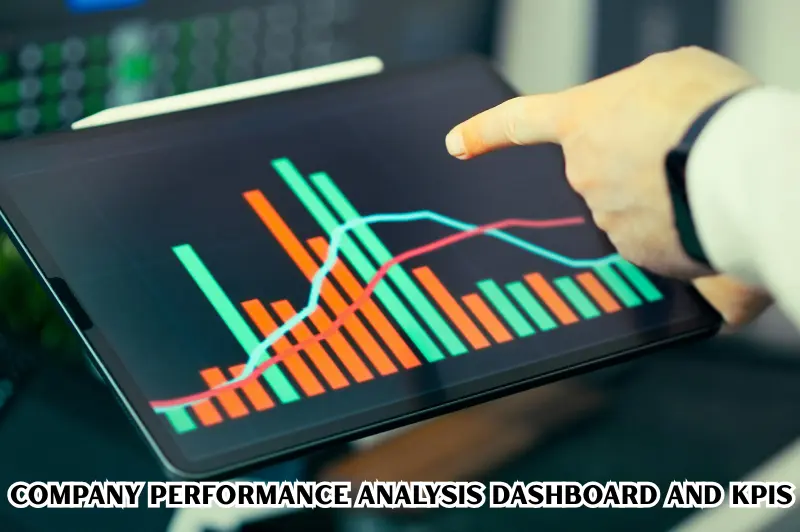
Evaluating company performance helps stakeholders understand the actual condition of a business and identify opportunities or risks.
For business owners and managers, performance evaluation can reveal where resources should be invested or where costs need to be controlled. Investors can use performance information to assess financial strength and business prospects. Analysts can use it to compare companies within the same industry.
Regular evaluation can help identify:
- Declining profitability
- Increasing operating costs
- Weak cash flow
- Excessive debt
- Customer losses
- Falling productivity
- Market-share changes
- Underperforming products
- Strategic problems
- Opportunities for expansion
A proper evaluation also prevents decisions based on one attractive metric. For example, rapid sales growth may look positive, but if expenses are increasing even faster, the company may not be improving financially.
How to Evaluate a Company’s Performance
The most reliable approach is to evaluate the company from several perspectives. Start with financial performance, then examine operations, customers, employees, market position, and strategic objectives.
1. Analyze Revenue Growth
Revenue is one of the first indicators to examine because it shows the amount of income generated from the company’s core activities.
Look at revenue over several periods rather than examining one year’s figure. Compare:
- Year-over-year revenue growth
- Quarterly revenue trends
- Revenue by product
- Revenue by geographic market
- Revenue by customer segment
- Organic growth versus growth from acquisitions
For example, if revenue increased consistently for several years, that may indicate strong demand. However, revenue growth alone does not prove that a company is financially healthy.
You should compare revenue growth with profit margins, operating expenses, cash flow, and industry growth.
2. Measure Profitability
Profitability shows how effectively a company converts revenue into earnings.
Important profitability measures include:
Gross Profit Margin:
Shows how much revenue remains after the cost of goods sold.
Operating Profit Margin:
Shows the proportion of revenue remaining after operating expenses.
Net Profit Margin:
Shows how much of the company’s revenue remains as net income after expenses, interest, and taxes.
Return on Assets (ROA):
Measures how effectively the company generates profit from its assets.
Return on Equity (ROE):
Measures profitability relative to shareholders’ equity.
When evaluating profitability, compare current results with previous periods and similar companies in the same industry.
How to Evaluate a Company’s Performance starts with reviewing financial results, while How to Evaluate a Company’s Performance also requires checking revenue, profit, and cash flow.
Learning How to Evaluate a Company’s Performance helps investors understand business growth, and How to Evaluate a Company’s Performance can reveal operational strengths and weaknesses.
A proper guide on How to Evaluate a Company’s Performance should examine profitability, efficiency, and market position, while How to Evaluate a Company’s Performance also includes comparing industry benchmarks.
Understanding How to Evaluate a Company’s Performance makes business analysis easier, and How to Evaluate a Company’s Performance provides useful insights when How to Evaluate a Company’s Performance is combined with financial and non-financial metrics.
3. Examine Cash Flow
Profit does not always equal available cash. A company can report accounting profits while experiencing cash-flow problems.
Review the company’s:
- Operating cash flow
- Investing cash flow
- Financing cash flow
- Free cash flow
- Cash balance
- Changes in working capital
Operating cash flow is particularly useful because it indicates how much cash the company’s normal business activities generate.
If profits are increasing but operating cash flow consistently remains weak, investigate why. Possible explanations may include changes in receivables, inventory, payment terms, or other working-capital factors.
4. Evaluate the Company’s Financial Strength
Financial stability is another important part of How to Evaluate a Company’s Performance.
Examine the company’s assets, liabilities, debt, and equity.
Useful indicators include:
- Debt-to-equity ratio
- Current ratio
- Quick ratio
- Interest coverage
- Total debt
- Cash reserves
- Working capital
A company with excessive debt may face greater financial pressure, particularly when interest costs rise or business conditions weaken.
However, debt should not automatically be considered negative. Some businesses use debt strategically to finance expansion. The key is whether the company can manage its obligations effectively.
5. Measure Operational Efficiency
Operational performance shows how efficiently the company turns resources into products, services, and revenue.
Important measures may include:
- Inventory turnover
- Asset turnover
- Production efficiency
- Order fulfillment time
- Operating cost per unit
- Capacity utilization
- Employee productivity
- Customer service response time
For example, a manufacturing company may evaluate production output, defect rates, downtime, and production costs. A software company may examine development cycles, system reliability, customer-support response times, and recurring revenue.
Operational metrics should always be interpreted according to the company’s industry and business model.
6. Evaluate Customer Performance
Customers are a major indicator of business health because sustainable revenue depends on the company’s ability to attract and retain them.
Important customer metrics include:
- Customer acquisition
- Customer retention
- Customer churn
- Repeat purchase rate
- Customer satisfaction
- Customer lifetime value
- Average order value
- Customer acquisition cost
- Complaints and returns
A company experiencing strong customer growth but poor retention may have an acquisition problem rather than sustainable growth.
Customer feedback can also reveal problems that financial statements may not show immediately.
7. Analyze Market Share and Competitive Position
Company performance should be evaluated in relation to competitors.
A company can increase its revenue while losing market share if the overall industry is growing faster.
Consider:
- Market share
- Competitor growth
- Pricing position
- Brand strength
- Product differentiation
- Distribution reach
- Customer loyalty
- Competitive advantages
Industry conditions are particularly important when interpreting performance. A decline may be less concerning if the entire industry is experiencing a downturn.
8. Evaluate Employee and Workforce Performance
Employees influence productivity, service quality, innovation, and operational efficiency.
Depending on the company, useful indicators may include:
- Revenue per employee
- Profit per employee
- Employee retention
- Absenteeism
- Training participation
- Productivity
- Employee engagement
- Time to fill open positions
Employee metrics should be used carefully. Productivity numbers alone may not capture employee quality, creativity, customer service, or long-term contribution.
9. Review Strategic Performance
Financial results tell only part of the story. A company should also be evaluated against its strategic objectives.
Ask:
- Did the company achieve its major goals?
- Did it enter planned markets?
- Did new products perform as expected?
- Did investments produce the expected results?
- Is the company improving its competitive position?
- Is management executing its strategy effectively?
For example, a company may deliberately spend more on research and development because it is launching a new product. Higher expenses may temporarily reduce profit but could support long-term strategic growth.
Key Metrics for How to Evaluate a Company’s Performance
Different metrics answer different questions. The following framework can make analysis easier:
| Performance Area | Key Metrics | What It Shows |
| Revenue | Revenue growth, sales growth | Business expansion |
| Profitability | Net margin, operating margin, ROE | Earnings efficiency |
| Liquidity | Current ratio, quick ratio | Short-term financial strength |
| Leverage | Debt-to-equity, interest coverage | Debt risk |
| Cash Flow | Operating cash flow, free cash flow | Cash generation |
| Operations | Asset turnover, inventory turnover | Resource efficiency |
| Customers | Retention, churn, acquisition cost | Customer health |
| Market | Market share, competitor growth | Competitive position |
| Employees | Revenue per employee, retention | Workforce performance |
| Strategy | Goal completion, project performance | Strategic execution |
The most useful analysis combines these metrics instead of relying on one measure.
How to Compare Company Performance Over Time
One of the best ways to evaluate a company is to compare its current performance with historical performance.
Use at least several periods when possible and examine trends rather than isolated results.
For example:
Revenue: $10M → $11M → $13M → $15M
This indicates an upward revenue trend. However, you should then check whether profit and cash flow followed the same direction.
Also compare:
- Revenue growth versus profit growth
- Profit growth versus cash-flow growth
- Costs versus revenue
- Debt versus earnings
- Customer growth versus customer retention
Trend analysis can reveal whether improvement is temporary or sustainable.
How to Compare a Company With Competitors
A company’s performance becomes easier to understand when you compare it with businesses operating in the same industry.
Choose comparable companies based on factors such as:
- Industry
- Business model
- Geographic market
- Company size
- Product category
- Customer segment
Then compare financial ratios, growth rates, margins, market position, and operating efficiency.
Avoid comparing businesses with completely different business models because their financial structures and performance indicators may naturally differ.
How to Evaluate a Company’s Performance Using Financial Statements
Financial statements provide essential information for company performance analysis.
Income Statement
The income statement helps you examine:
- Revenue
- Cost of sales
- Operating expenses
- Operating income
- Interest expense
- Taxes
- Net income
It helps answer the question: Is the company becoming more profitable?
Balance Sheet
The balance sheet shows:
- Assets
- Liabilities
- Equity
- Cash
- Debt
- Working capital
It helps answer: How financially stable is the company?
Cash Flow Statement
The cash flow statement provides information about:
- Operating cash flows
- Investing activities
- Financing activities
It helps answer: Is the business actually generating and managing cash effectively?
Using all three statements together provides a much stronger picture than looking at the income statement alone.
A Step-by-Step Process for Company Performance Evaluation
If you need a practical framework, follow these steps.
Step 1: Define the Evaluation Objective
Determine what you want to discover.
For example, you might want to evaluate:
- Overall financial health
- Investment potential
- Business growth
- Operational efficiency
- Competitive position
- Management performance
Step 2: Collect Reliable Data
Gather information from appropriate sources such as annual reports, financial statements, regulatory filings, investor presentations, company reports, and credible industry sources.
Step 3: Select Relevant KPIs
Choose metrics that match the company’s industry and objectives.
Do not measure everything simply because data is available.
Step 4: Analyze Historical Trends
Compare current performance with previous periods to identify growth, decline, stability, or volatility.
Step 5: Compare With Competitors
Use relevant competitors or industry benchmarks to understand relative performance.
Step 6: Identify Strengths and Weaknesses
Determine which areas are performing well and which require improvement.
Step 7: Investigate the Causes
Do not stop at identifying that performance changed. Ask why.
For example, declining profit could result from:
- Higher material costs
- Increased salaries
- Lower prices
- Weak sales
- Higher marketing expenses
- Interest costs
Step 8: Make an Overall Assessment
Combine financial, operational, customer, market, and strategic information before reaching a conclusion.
Benefits of Evaluating Company Performance
A structured performance evaluation can provide several benefits.
Better Business Decisions
Management can make decisions based on evidence rather than assumptions.
Early Risk Detection
Declining margins, rising debt, weak cash flow, or customer churn can reveal problems before they become more serious.
Improved Resource Allocation
Companies can identify which products, departments, markets, or projects deserve additional investment.
Stronger Strategic Planning
Performance data helps businesses determine whether their current strategy is producing the desired results.
Better Investor Analysis
Investors can evaluate profitability, financial stability, growth prospects, and business risks more systematically.
Limitations of Company Performance Analysis
Even a detailed analysis has limitations.
Financial statements are based on accounting rules and may not capture every aspect of business quality. Non-financial factors such as employee culture, brand reputation, innovation capability, and customer loyalty can be difficult to quantify.
Historical performance also does not guarantee future results.
Additionally, ratios can be misleading when used without context. A high ROE, for example, may partly reflect significant financial leverage rather than exceptionally strong operating performance.
Therefore, company performance evaluation should combine quantitative data with qualitative analysis.
Common Mistakes When Evaluating Company Performance
Avoid these common errors:
Looking Only at Revenue
High revenue does not necessarily mean high profitability or strong cash generation.
Focusing Only on Net Profit
Net profit can be influenced by factors outside core operations. Examine operating performance and cash flow as well.
Ignoring Industry Context
A performance metric should be interpreted according to industry norms and business models.
Using Only One Year of Data
A single period may not reveal the company’s underlying trend.
Ignoring Debt
Growth financed by excessive debt can create financial risk.
Ignoring Customers
Financial performance may deteriorate later if customer retention and satisfaction are already declining.
Comparing Incompatible Companies
A small software company and a large manufacturing business should not be evaluated using exactly the same benchmarks.
Tips for More Accurate Company Performance Analysis
For a stronger evaluation, keep the following principles in mind:
- Use multiple performance indicators.
- Focus on trends rather than isolated numbers.
- Compare results with relevant competitors.
- Consider industry conditions.
- Analyze both profit and cash flow.
- Review debt and liquidity.
- Include customer and operational metrics.
- Investigate the reasons behind major changes.
- Separate temporary events from long-term trends.
- Use reliable and recent information.
- Consider both quantitative and qualitative evidence.
The most important principle is context. A metric has meaning only when you understand what drives it and how it compares with an appropriate benchmark.
To better understand how to evaluate a company’s performance, it is also helpful to explore related topics such as company financial analysis, company business model analysis, and company SWOT analysis. For reliable financial information and company filings, readers can also refer to trusted sources such as SEC.gov and Investor.gov.
Frequently Asked Questions
What is the best way to evaluate a company’s performance?
The best approach is to evaluate several areas together, including revenue growth, profitability, cash flow, financial stability, operational efficiency, customer performance, market position, and strategic execution. Comparing these indicators over time and against relevant competitors provides a more complete assessment than relying on one financial metric.
Which financial ratios are most important for company performance?
Important ratios include profitability ratios such as net profit margin and ROE, liquidity ratios such as the current ratio, leverage ratios such as debt-to-equity, and efficiency ratios such as asset turnover. The most relevant ratios depend on the company’s industry, business model, size, and financial structure.
Can revenue growth alone show that a company is performing well?
No. Revenue growth is useful, but it does not necessarily indicate strong overall performance. A company can increase sales while experiencing declining margins, weak cash flow, rising debt, or increasing customer churn. Revenue should therefore be evaluated alongside profitability, cash flow, costs, and other relevant performance indicators.
How often should a company’s performance be evaluated?
Performance should be monitored regularly, but the appropriate frequency depends on the business. Management may review key operating indicators monthly or quarterly, while a broader strategic assessment may occur annually. Regular monitoring helps identify significant changes early and gives management time to respond.
Why should company performance be compared with competitors?
Competitor comparison provides context. A company may report strong revenue growth but still lose market share if competitors are growing faster. Comparing relevant companies can help identify differences in profitability, efficiency, pricing, market position, and strategic performance while highlighting potential competitive advantages or weaknesses.
Conclusion
How to Evaluate a Company’s Performance effectively requires a complete view of the business rather than focusing on one number. Start by analyzing revenue, profitability, cash flow, debt, and liquidity. Then examine operational efficiency, customer performance, employees, market position, and strategic objectives.
The strongest evaluation combines financial analysis, operational analysis, competitive benchmarking, customer metrics, and strategic assessment. Historical trends and industry comparisons are especially important because they provide context for individual numbers.
As a practical next step, create a performance scorecard for the company you are analyzing. Select relevant KPIs, collect data from reliable sources, compare current results with historical and industry benchmarks, and investigate the reasons behind major changes. This approach will give you a clearer and more balanced understanding of the company’s actual performance.
