


Introduction
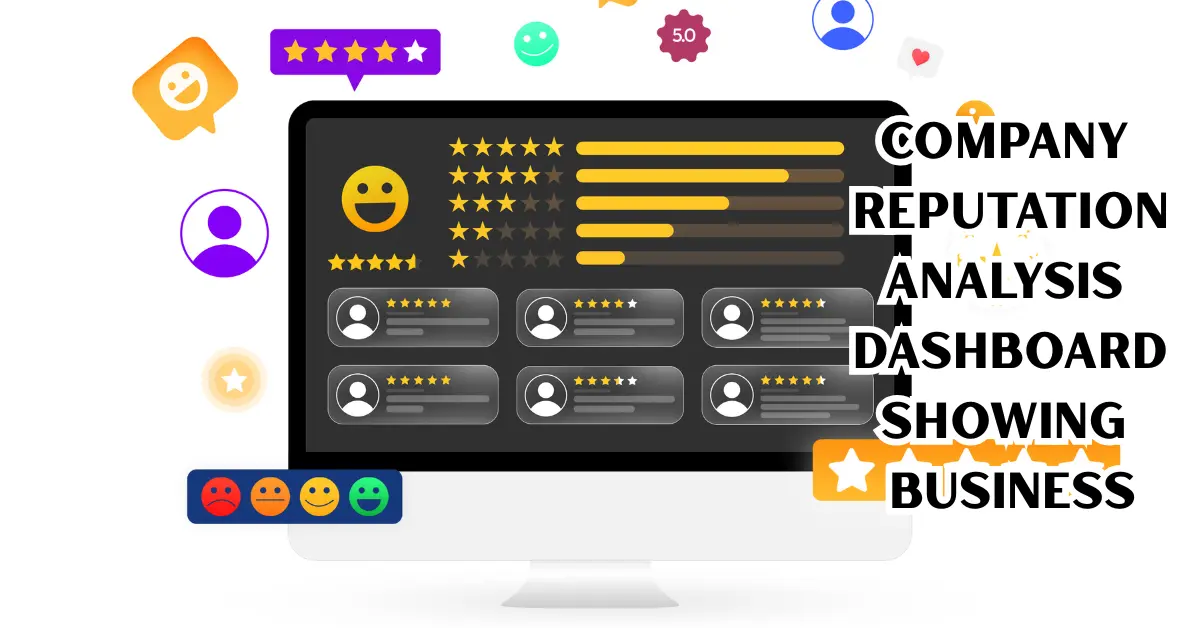
Company Reputation Analysis is the process of evaluating how customers, employees, business partners, investors, competitors, and the wider public perceive a company. It helps businesses understand what people think about their products, services, communication, customer experience, leadership, and overall brand.
A strong reputation can support customer trust and business relationships, while unresolved complaints, poor reviews, misleading communication, or inconsistent experiences can create reputational risks. A proper Company Reputation Analysis brings these signals together so a business can identify strengths, discover problems, and make informed improvements.
This guide explains what company reputation analysis means, why it matters, how to conduct one step by step, which reputation signals to monitor, common mistakes to avoid, and practical ways to improve a company’s reputation.
What Is Company Reputation Analysis?
Company Reputation Analysis is a structured assessment of how a company is perceived by its important stakeholders and how that perception compares with the company’s intended brand image.
Reputation is broader than a company’s logo, advertising, or website. It can be influenced by customer reviews, news coverage, employee experiences, social media discussions, product quality, customer support, business practices, and public communication.
For example, a company may describe itself as customer-focused, but hundreds of unresolved customer complaints may create a different public perception. Reputation analysis helps identify this gap.
Reputation vs. Brand Image
Brand image refers largely to how a company wants to be perceived and how its branding communicates that position. Reputation develops from the experiences and opinions people form over time.
A Company Reputation Analysis therefore looks beyond promotional content and examines evidence from multiple sources.
Why Is Company Reputation Analysis Important?
A company reputation analysis helps management understand how the organization is viewed outside its own marketing materials.
It can help businesses:
- Identify recurring customer complaints
- Understand positive and negative public sentiment
- Monitor online reviews
- Detect potential reputation risks
- Find gaps between brand promises and customer experiences
- Improve customer service
- Strengthen communication
- Understand competitor perception
- Protect trust during difficult situations
- Identify opportunities to improve products and services
Reputation analysis is particularly useful when a company is launching a new product, entering a new market, dealing with negative publicity, changing its positioning, or trying to improve customer retention.
What Factors Affect Company Reputation?
Several factors contribute to corporate reputation. The importance of each factor can vary by industry and stakeholder group.
Customer Experience
Customer experience is one of the most visible reputation factors. Customers may evaluate product quality, delivery, pricing, support, returns, communication, and how quickly complaints are resolved.
A company that consistently delivers on its promises can develop positive customer perceptions. Repeated service failures can have the opposite effect.
Online Reviews and Ratings
Reviews on business directories, marketplaces, social platforms, and industry websites can influence how potential customers evaluate a company.
During a reputation analysis, businesses should look beyond the average rating. Review volume, recurring complaints, recent feedback, response quality, and changes over time can provide more useful information.
Employee Perception
Employees interact with customers, suppliers, managers, and other stakeholders. Their experiences can influence employer reputation and, indirectly, public perception.
Useful signals may include employee reviews, retention patterns, workplace feedback, and publicly discussed employment issues.
Media Coverage
News articles and industry publications can shape public understanding of a company. Reputation analysis should consider both positive and negative coverage while checking the credibility and context of each source.
Social Media Discussions
Social platforms can reveal what customers and communities are discussing about a company. Social listening can identify recurring themes, complaints, product reactions, and emerging reputation issues.
Business Ethics and Transparency
Public perception can also be affected by how a company communicates about pricing, policies, partnerships, mistakes, data practices, and other important business decisions.
Clear and accurate communication can help reduce confusion and build credibility.
How to Conduct a Company Reputation Analysis
A useful reputation analysis should follow a consistent process instead of relying on a few reviews or social media comments.
Step 1: Define the Objective
Start by deciding what you want to learn.
For example, your objective may be to:
- Measure overall public perception
- Investigate declining customer trust
- Analyze customer reviews
- Compare reputation across competitors
- Evaluate a recent business change
- Identify potential reputation risks
A clear objective keeps the research focused.
Step 2: Identify Key Stakeholders
List the groups whose opinions matter to the company’s reputation.
Common stakeholders include:
- Customers
- Employees
- Suppliers
- Business partners
- Investors
- Industry professionals
- Local communities
- Media organizations
Different stakeholder groups can have very different perceptions of the same company.
Step 3: Collect Reputation Data
Gather information from multiple reliable sources rather than depending on one platform.
Potential sources include:
- Customer reviews
- Surveys
- Social media mentions
- Search results
- Business listings
- News coverage
- Industry publications
- Employee feedback
- Customer-support records
- Public company statements
- Competitor reviews
The objective is to identify consistent patterns, not isolated comments.
Step 4: Analyze Sentiment and Themes
Organize feedback into positive, negative, and neutral themes.
For example, a software company might receive positive comments about:
- Ease of use
- Features
- Customer support
But negative feedback might repeatedly mention:
- Pricing
- Technical problems
- Slow response times
Instead of simply counting positive and negative comments, identify the subjects behind those opinions.
Step 5: Examine Search Results
Search engine results can strongly influence what potential customers see when they research a company.
Review searches for:
- Company name
- Company name + reviews
- Company name + complaints
- Company name + customer service
- Company name + products
- Company name + industry
Look at the information appearing across different search results and determine whether important pages are accurate, current, and representative.
Step 6: Compare Competitors
Competitor comparison can provide context.
For example, if a company receives complaints about delivery times, analyzing competitor feedback may show whether this is a company-specific issue or a broader industry challenge.
The comparison should examine similar factors across businesses rather than relying on isolated examples.
Step 7: Identify Reputation Risks
After collecting and organizing the evidence, identify issues that could negatively affect trust.
Potential risks include:
- Repeated unresolved complaints
- Inaccurate public information
- Sudden negative review trends
- Poor customer support
- Confusing policies
- Negative media coverage
- Employee-related concerns
- Inconsistent brand communication
- Product quality problems
Each risk should be evaluated based on its evidence, frequency, relevance, and potential business impact.
Step 8: Create an Action Plan
The final stage is turning findings into practical actions.
For each major issue, define:
- The problem
- Supporting evidence
- Stakeholders affected
- Business impact
- Recommended action
- Responsible team
- Review date
This turns reputation research into a measurable business improvement process.
Company Reputation Analysis Example
Imagine a fictional company called BrightHome Appliances.
The company has strong product reviews but receives repeated complaints about after-sales support.
A basic reputation analysis might show:
| Reputation Area | Observation | Possible Action |
| Product quality | Frequently praised | Maintain quality standards |
| Customer support | Recurring complaints | Improve response process |
| Online reviews | Mostly positive with support-related negatives | Address repeated service issues |
| Social media | Questions about warranty policies | Explain policies clearly |
| Search visibility | Product information is strong | Improve customer-service information |
The analysis does not simply label the company as having a good or bad reputation. Instead, it identifies specific areas where perception is strong and areas requiring attention.
Benefits of Company Reputation Analysis
Better Customer Understanding
Reputation research reveals what customers actually experience and discuss rather than what a company assumes they think.
Faster Risk Detection
Regular monitoring can reveal recurring problems before they become larger reputation issues.
Improved Customer Service
Repeated complaints can show where support processes need improvement.
Stronger Communication
A reputation analysis can identify information gaps and help businesses create clearer public communication.
Better Strategic Decisions
Management can use reputation insights alongside financial, operational, customer, and market data when making business decisions.
Limitations of Company Reputation Analysis
A reputation analysis is useful, but it is not a perfect measurement of public opinion.
Online feedback can be affected by:
- Review bias
- Small sample sizes
- Fake or misleading content
- Highly emotional individual experiences
- Platform demographics
- Differences between customer segments
- Changes in public discussion over time
For this reason, businesses should use multiple evidence sources and avoid treating one rating or review as a complete representation of the company.
Common Company Reputation Analysis Mistakes
Focusing Only on Negative Reviews
Negative feedback deserves attention, but ignoring positive feedback can produce an incomplete picture.
Looking Only at Average Ratings
A four-star average does not explain why customers are satisfied or dissatisfied. Read recurring themes and recent reviews as well.
Ignoring Employees
Employee perception can provide valuable information about internal processes and workplace reputation.
Using Outdated Information
Reputation can change quickly. Recent evidence should be considered alongside historical trends.
Responding Emotionally
Companies should avoid defensive or aggressive responses to criticism. A professional response should focus on facts, clarification, and appropriate solutions.
Treating Social Media as the Entire Reputation
Social media is useful, but it represents only one part of the broader reputation landscape.
How to Improve Company Reputation
A reputation analysis is most valuable when it leads to measurable improvements.
Respond to Legitimate Customer Concerns
When customers raise genuine problems, acknowledge the issue and provide useful information about the next steps.
Improve the Customer Experience
If analysis reveals repeated problems with delivery, support, product quality, or communication, address the underlying process rather than simply responding to individual complaints.
Encourage Genuine Feedback
Businesses can make it easy for real customers to provide honest feedback after a purchase or service interaction. Feedback requests should not pressure customers to provide positive reviews.
Publish Accurate Information
Keep company profiles, product details, policies, contact information, and other public-facing information accurate and updated.
Monitor Reputation Regularly
Reputation management should not happen only after a crisis. Regular monitoring makes it easier to detect trends and respond appropriately.
Build Consistency Across Channels
The company’s website, social media profiles, customer support, listings, and public statements should communicate accurate and consistent information.
Reputation Analysis Metrics to Monitor
There is no single metric that completely represents reputation. A useful measurement system can combine several indicators.
Consider monitoring:
- Review volume
- Review rating trends
- Positive and negative sentiment
- Complaint frequency
- Response time
- Resolution rate
- Customer satisfaction feedback
- Brand mentions
- Media coverage
- Search-result visibility
- Employee feedback
- Recurring reputation themes
The most useful metrics depend on the company, industry, audience, and analysis objective.
How Often Should You Perform a Company Reputation Analysis?
The frequency depends on business size, industry, risk level, and customer activity.
A company with a large customer base and frequent online discussions may monitor reputation continuously and conduct deeper reviews monthly or quarterly.
Smaller companies may perform a structured Company Reputation Analysis quarterly while monitoring reviews and important mentions more frequently.
Businesses experiencing a major product launch, public controversy, acquisition, rebranding, or significant service change may need additional monitoring.
Tips for Better Reputation Analysis
For more reliable results:
- Use multiple information sources
- Separate facts from opinions
- Look for recurring patterns
- Give greater attention to recent evidence
- Compare similar competitors
- Segment feedback by customer type
- Record changes over time
- Investigate unusual spikes in complaints
- Respond professionally to legitimate concerns
- Turn findings into measurable actions
The goal is not simply to collect positive comments. The goal is to understand perception accurately enough to improve the underlying business experience.
A detailed Company Reputation Analysis can help businesses understand how customers and stakeholders perceive their brand. For related research, explore our Company Business Model Analysis and Company SWOT Analysis guides. Businesses can also review trusted resources such as Google Business Profile to better understand how online business information and customer reviews can influence public perception.
Frequently Asked Questions
What is Company Reputation Analysis?
Company Reputation Analysis is the structured process of evaluating how customers, employees, partners, media, and other stakeholders perceive a company. It can include reviews, social media, search results, surveys, news coverage, customer feedback, and other reputation signals.
Why is Company Reputation Analysis important?
It helps businesses understand public perception, identify recurring complaints, discover reputation risks, improve customer experience, and strengthen communication. It also provides useful evidence for identifying gaps between what a company promises and what stakeholders actually experience.
What should be included in a company reputation analysis?
A comprehensive analysis can include customer reviews, ratings, social media mentions, search results, news coverage, employee feedback, customer complaints, stakeholder opinions, competitor comparisons, and relevant company communications. The exact areas should depend on the company’s industry and analysis objectives.
How can a company measure its reputation?
A company can monitor review trends, customer feedback, sentiment, complaint volume, response and resolution patterns, brand mentions, media coverage, search visibility, and employee feedback. Using several indicators together provides a more complete picture than relying on a single reputation score.
How can a company improve its reputation?
Companies can improve reputation by addressing genuine customer concerns, improving products and services, communicating accurately, responding professionally to criticism, maintaining consistent public information, and monitoring stakeholder feedback regularly. Long-term reputation improvement usually depends on improving the underlying customer and stakeholder experience.
Conclusion
Company Reputation Analysis provides a structured way to understand how a business is perceived by the people who matter to its success. Instead of relying on assumptions, companies can examine reviews, customer feedback, search results, social discussions, media coverage, employee perspectives, and other evidence.
A practical analysis should identify the company’s reputation strengths, recurring concerns, information gaps, and potential risks. The findings should then be converted into specific actions that improve customer experience, communication, transparency, and business processes.
The best next step is to create a simple reputation-monitoring system, collect feedback from several reliable sources, identify recurring themes, and review the results regularly. Reputation is built through repeated experiences, so meaningful improvement requires consistent action over time
